
Trochoidal milling for stainless steels and superalloys

DYN-INTEG | HR38TSM
This innovative tool optimizes high feed rates with low width and high depth of cut, leading to impressive material removal rates and cycle time reductions in challenging materials. Furthermore, this machining method provides consistent and gradual wear across the entire cutting edge, contributing to longer tool life.
Features and advantages
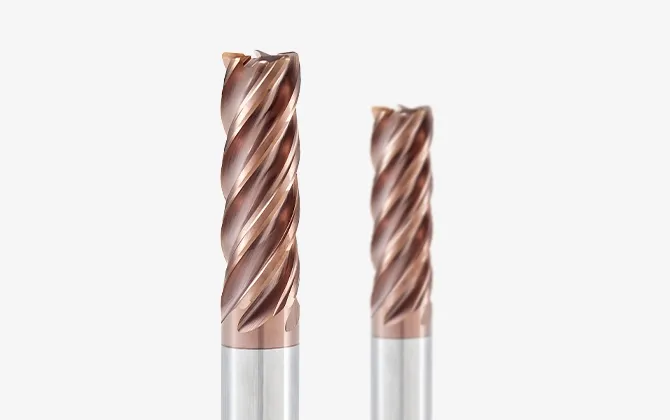
■ Optimized five-flute geometry for high-efficiency milling in stainless steel and superalloys;
■ Unequal channel spacing provides vibration-free operation and longer service life;
■ Improved process reliability;
■ Single tool for roughing and finishing operations;
■ Available in two cutting lengths: 2 x DC and 3 x DC;
■ Ramp capacity up to 3º;
■ New high-performance coating, PHF, for greater wear resistance.
Exotic materials. Extreme challenges.
What does it take to overcome the impossible?
Trochoidal Milling
One of the main advantages of this approach is the ability to achieve higher material removal rates by optimizing the tool path and minimizing tool-material contact. This leads to higher cutting speeds and shorter cycle times.
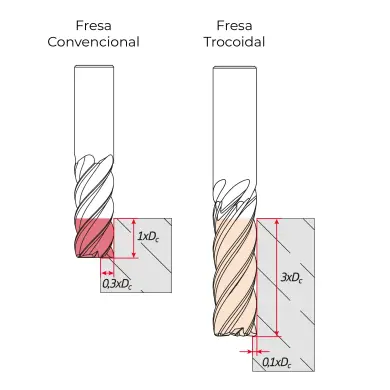
The HR38TSM cutter can cut depths up to three times its diameter in a single pass, enabling deeper cuts without the problems typically associated with conventional milling, such as excessive heat, vibration, tool deflection, and chip re-cutting. The intermittent cutting action of trochoidal milling reduces heat generation and cutting forces, extending tool life. Furthermore, the dynamic tool path improves chip evacuation, avoiding issues that can affect surface quality. This method also produces smoother surface finishes due to reduced vibrations during the machining process.
Trochoidal milling achieves high material removal rates, even on machines with lower power capacities. This technique is also economical, as it allows the same tool to create diameters larger than its cutting diameter, allowing it to cut various hole sizes and reducing the need for multiple tools, which helps reduce production costs.
Tool Fitting Angle
Conventional vs Trochoidal
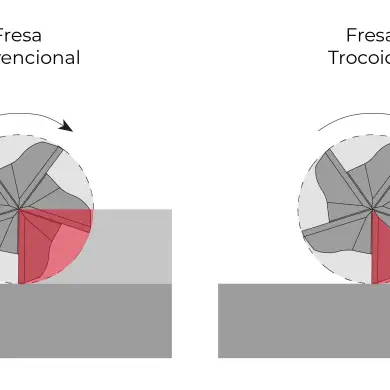
If we keep the tool engagement angle (we) constant throughout the machining process, the chip thickness will also remain constant. However, if the side cutting width (ae) is constant, the chip thickness may vary with the workpiece geometry.
Machining Processes
90º MILLING
TROCHOIDAL MILLING
TROCHOIDAL CHANNEL MILLING
FINISH
Product range